

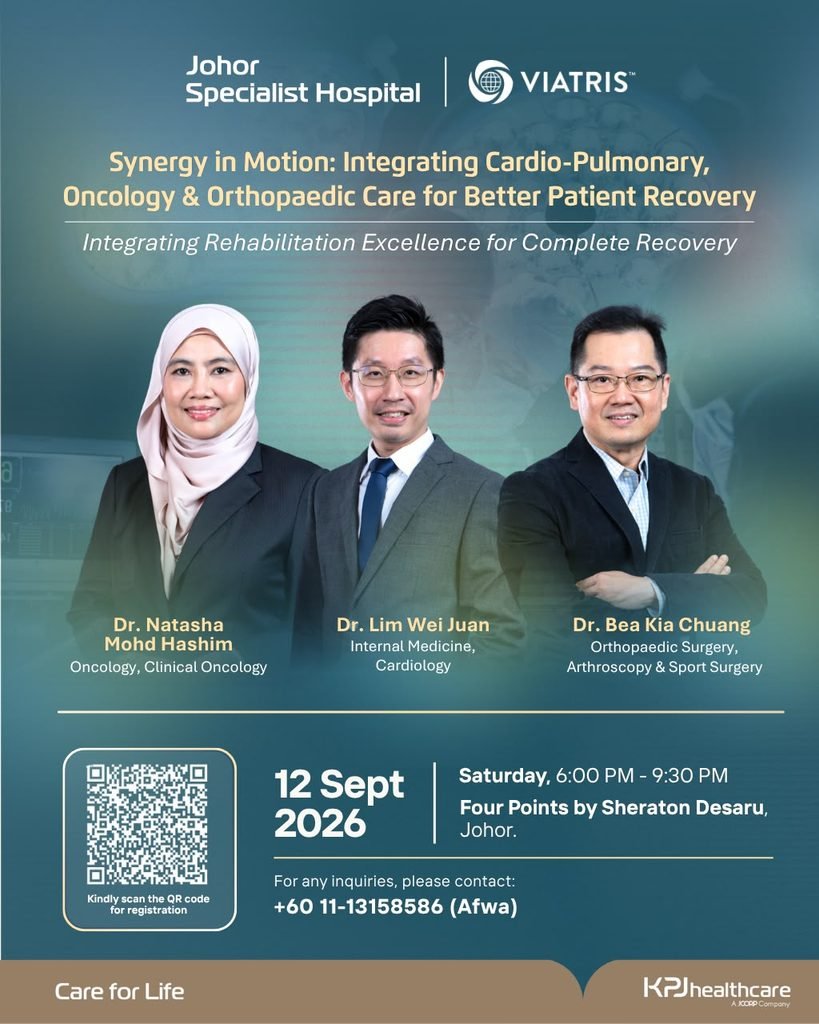
It was a pleasure and privilege to be invited as a speaker at a recent multidisciplinary medical symposium organised by Johor Specialist Hospital (JSH) in collaboration with Viatris, held at Four Points by Sheraton Desaru.
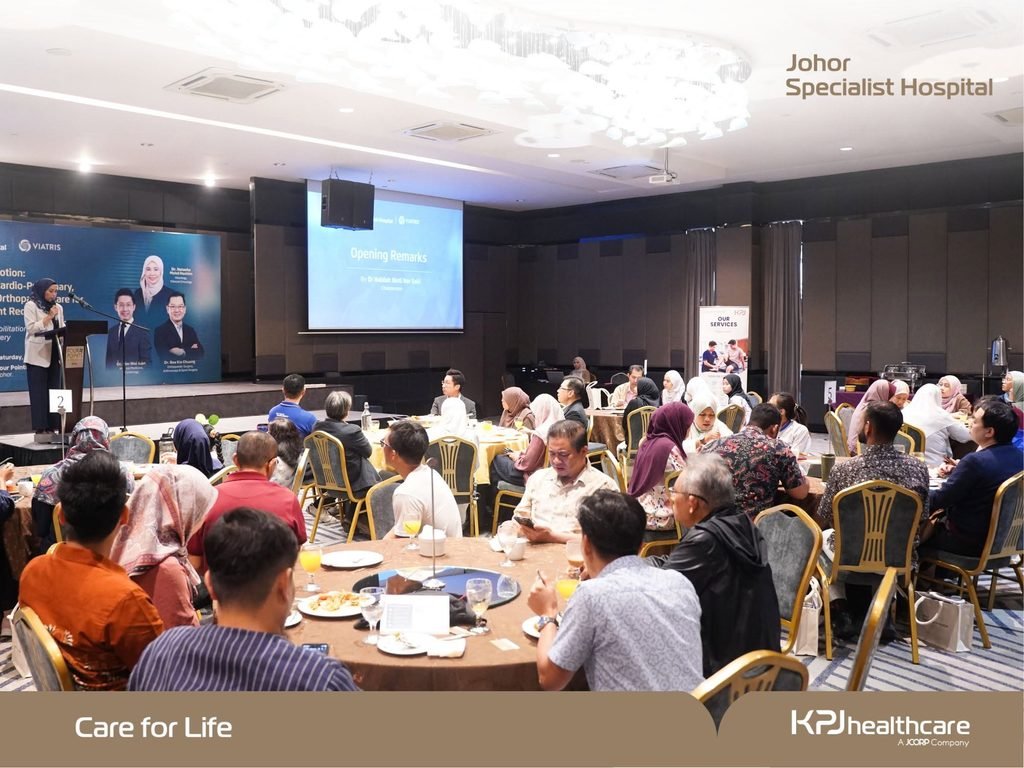
Set against the relaxed surroundings of Desaru, the evening brought together healthcare professionals for an engaging programme covering oncology, cardiology, orthopaedics and pain management.
I was honoured to represent the cardiology session with my talk:
❤️ “Normal ECG = Normal Heart?”
The ECG is one of the most fundamental investigations in cardiovascular medicine. It is readily available, non-invasive and provides valuable information about the heart’s electrical activity.
However, an important clinical question remains:
If the ECG is normal, does that mean the heart is normal?
The answer is not necessarily.
A Normal ECG Does Not Always Exclude Heart Disease
A resting ECG can provide important information about heart rhythm, previous myocardial infarction, conduction abnormalities and certain patterns of cardiac disease.
However, some patients with significant cardiovascular disease may have a normal resting ECG, particularly when they are not experiencing symptoms at the time of the test.
For example, patients with coronary artery disease may have a normal resting ECG despite having significant coronary artery narrowing.
This is why cardiovascular assessment should not rely on the ECG alone.
Instead, we need to consider the complete clinical picture:
Symptoms + Risk Factors + Clinical Examination + Appropriate Investigations

When Should We Look Beyond the ECG?
Depending on the patient’s symptoms and cardiovascular risk profile, additional investigations may be appropriate.
🫀 Echocardiogram
Provides information about heart structure, pumping function, chamber size and heart valves.
🏃 Exercise Stress Test
Can assess the heart’s response to exercise and help identify inducible myocardial ischaemia in selected patients.
🩻 CT Coronary Angiography
A non-invasive method of visualising the coronary arteries and assessing for coronary atherosclerosis and stenosis.
🔢 Coronary Calcium Score
Can help quantify calcified coronary plaque and contribute to cardiovascular risk assessment in selected patients.
🩺 Invasive Coronary Angiography
Provides detailed assessment of the coronary arteries and, when necessary, allows treatment to be performed during the same procedure.

The ECG Is a Starting Point — Not Always the Final Answer
One of the key messages I wanted to share during the session was that a medical test should always be interpreted within the appropriate clinical context.
A patient with chest discomfort and cardiovascular risk factors may require further evaluation even when the resting ECG appears normal.
Conversely, not every patient with a normal ECG requires extensive cardiac investigations.
The important principle is to identify which patient needs further assessment and which investigation is most appropriate.
An Evening of Multidisciplinary Learning
The symposium featured an excellent range of topics from different medical specialties.
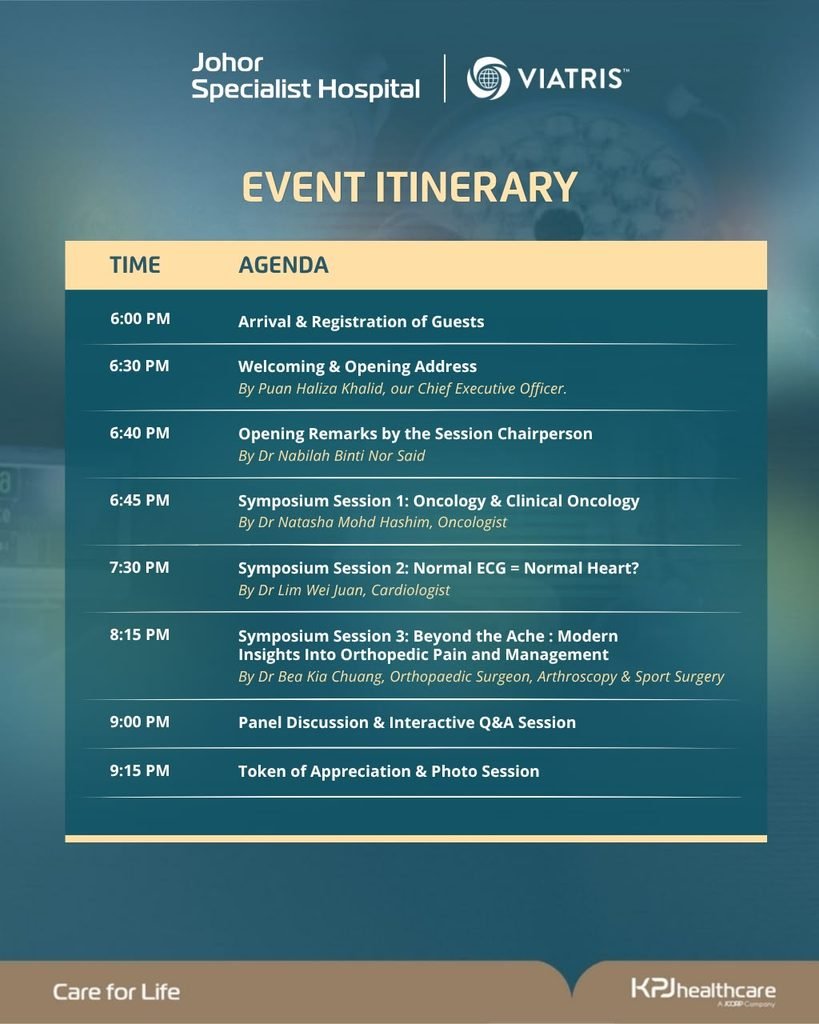
The programme included:
Dr Natasha Mohd Hashim, Oncologist
Oncology & Clinical Oncology
Dr Lim Wei Juan, Cardiologist
Normal ECG = Normal Heart?
Dr Bea Kia Chuang, Orthopaedic Surgeon, Arthroscopy & Sport Surgery
Beyond the Ache: Modern Insights Into Orthopedic Pain and Management

The sessions were followed by a panel discussion and interactive Q&A, providing an opportunity for further discussion and exchange of clinical experiences among the participants.
I would like to thank Johor Specialist Hospital and Viatris for the kind invitation and for organising this meaningful educational programme.
It was a privilege to share cardiology insights with fellow healthcare professionals, and especially to discuss an important message that we encounter frequently in clinical practice:
A normal ECG is reassuring, but it does not always mean a normal heart.
Sometimes, we need to look beyond the ECG.