
For decades, cardiologists have focused on one goal: lowering LDL cholesterol (“bad cholesterol”) to prevent heart attacks and strokes.
Yet despite high-intensity statins, ezetimibe, and lifestyle modification, many patients with Atherosclerotic Cardiovascular Disease (ASCVD) still fail to achieve guideline-recommended LDL-C targets.
The question is no longer:
“Should we lower LDL cholesterol?”
The real question is:
“How low can we safely go, and how can we keep LDL cholesterol low for life?”
This is where Sybrava (siRNA therapy) enters the game.
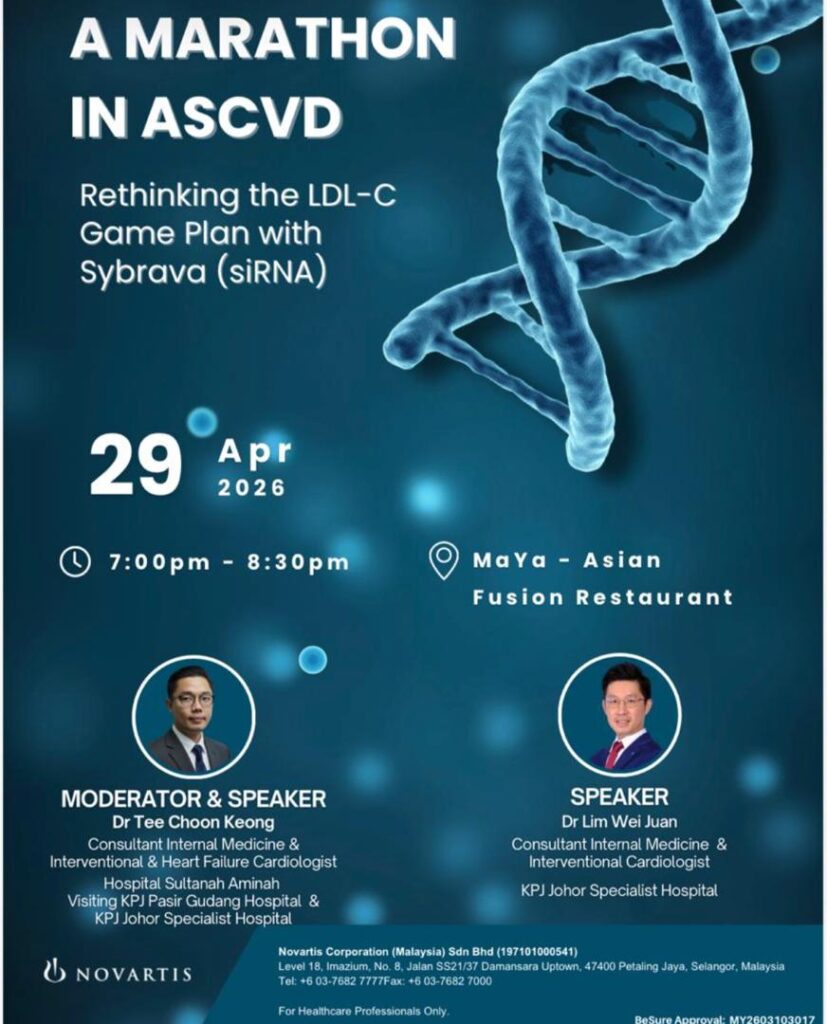
What is ASCVD?
ASCVD refers to conditions caused by cholesterol plaque build-up inside arteries, including:
- Previous heart attack
- Coronary artery disease
- Coronary stenting (PCI)
- Coronary bypass surgery
- Stroke
- Peripheral arterial disease
Once a patient develops ASCVD, they remain at very high cardiovascular risk for the rest of their life.
Think of ASCVD as a marathon, not a sprint.
Every year that LDL cholesterol remains elevated is another opportunity for plaque progression and future cardiovascular events.
Why LDL Cholesterol Matters
LDL cholesterol is one of the strongest drivers of plaque formation.
Numerous studies have consistently shown:
✔ Lower LDL-C = Lower risk of heart attack
✔ Lower LDL-C = Lower risk of stroke
✔ Lower LDL-C = Lower cardiovascular mortality
Current international guidelines recommend:
LDL-C Targets
Very High-Risk ASCVD Patients
- LDL-C < 1.4 mmol/L (<55 mg/dL)
Extremely High-Risk Patients
- LDL-C < 1.0 mmol/L (<40 mg/dL)
The challenge?
Many patients remain above target despite maximal statin therapy.

The Problem with Traditional Cholesterol Treatment
While statins remain the foundation of therapy, several real-world issues exist:
1. Poor Medication Adherence
Many patients forget daily medications.
Missing tablets leads to fluctuating LDL levels and loss of protection.
2. Statin Intolerance
Some patients develop:
- Muscle aches
- Fatigue
- Elevated liver enzymes
Although true statin intolerance is uncommon, it remains a barrier.
3. Persistent Residual Risk
Even patients on high-dose statins may not reach LDL targets.
Additional therapies are often required.
What is Sybrava (siRNA Therapy)?
Sybrava utilizes small interfering RNA (siRNA) technology.
Instead of simply blocking cholesterol production, siRNA works at the genetic messenger level.
It targets the production of PCSK9, a protein responsible for LDL receptor degradation.
When PCSK9 is reduced:
✅ More LDL receptors remain active
✅ The liver removes more LDL cholesterol from circulation
✅ LDL cholesterol falls significantly and sustainably
Why siRNA Technology is Different
Imagine LDL receptors as vacuum cleaners removing cholesterol from your bloodstream.
PCSK9 acts like a worker that keeps throwing those vacuum cleaners away.
Sybrava reduces the production of PCSK9.
As a result:
- More LDL receptors survive
- More cholesterol is cleared
- LDL-C remains low for prolonged periods
This represents a completely different treatment strategy from traditional statins.

Key Benefits of Sybrava
Sustained LDL Reduction
One of the most exciting features is long-lasting LDL-C lowering.
Patients do not need to remember daily medication for this specific mechanism.
Consistent Cholesterol Control
Unlike daily tablets that can be missed, LDL lowering remains more stable over time.
Complementary to Statins
Sybrava is not necessarily a replacement for statins.
Instead, it may work alongside:
- Statins
- Ezetimibe
- Other lipid-lowering therapies
to achieve aggressive LDL targets.
Why “Lower is Better” in ASCVD
Large cardiovascular outcome trials have repeatedly demonstrated:
There appears to be no harmful lower threshold for LDL cholesterol in high-risk ASCVD patients.
The concept is simple:
Less LDL cholesterol means less plaque accumulation.
Less plaque means lower risk of:
- Heart attack
- Stroke
- Need for repeat stenting
- Cardiovascular death
For patients who already have coronary stents, achieving LDL-C target is not optional—it is essential.
A Message for Patients with Previous Stents
Many patients ask:
“My stent is already inserted. Can I stop my cholesterol medication?”
The answer is no.
A stent treats one blockage.
ASCVD is a disease affecting the entire vascular system.
Without continued LDL control:
- Existing plaques may enlarge
- New plaques may develop
- Future heart attacks can still occur
The goal is not just fixing today’s blockage.
The goal is preventing tomorrow’s heart attack.
The Future of Cholesterol Management
The landscape of cardiovascular prevention is rapidly evolving.
From statins to PCSK9 inhibitors and now siRNA technology, clinicians have more tools than ever before to help patients achieve guideline-directed LDL targets.
The future is shifting toward:
- Earlier intervention
- More intensive LDL reduction
- Better adherence
- Long-term cardiovascular protection
For patients living with ASCVD, the journey truly is a marathon.
And every reduction in LDL cholesterol is another step toward finishing that marathon stronger.
Key Takeaway
ASCVD is a lifelong disease.
LDL cholesterol remains the most important modifiable risk factor.
With innovative therapies such as Sybrava (siRNA), achieving and maintaining very low LDL-C levels may become easier, helping reduce the risk of future cardiovascular events.
Remember:
The stent fixes the blockage.
Lowering LDL cholesterol protects your future.